
bullet proof glass display case
Understanding Snap-On Micrometers Precision Tools for Professionals Snap-On micrometers represent a pinnacle in precision measuring tools, widely embraced by professionals in various fields including automotive, manufacturing, and engineering. These tools are designed to provide accurate measurements of small dimensions, enabling users to achieve tighter tolerances and enhance the quality of their work. Understanding Snap-On Micrometers Precision Tools for Professionals One of the standout features of Snap-On micrometers is their robust construction. They are designed to withstand the rigors of daily use in demanding environments such as workshops and construction sites. Made from high-quality materials, these tools resist wear and tear, ensuring longevity and maintaining measurement accuracy over time. The ergonomic design of Snap-On micrometers also enhances user comfort, allowing professionals to hold and operate them with ease during prolonged use. snap on micrometer Accuracy is paramount when it comes to measurement tools, and Snap-On micrometers excel in this regard. They are often equipped with features such as a friction thimble, which helps to apply consistent pressure during measurements, thereby reducing the likelihood of error. Furthermore, many models come with an easy-to-read scale and a ratchet stop that allows for repeatable and reliable readings, which is crucial in high-stakes scenarios where precision is non-negotiable. In addition to their performance, Snap-On micrometers are available in a variety of models tailored for specific applications. For instance, some micrometers are designed for outside measurements, while others are suited for measuring inside dimensions or depths. This versatility allows professionals to select the right tool for their specific needs, enhancing efficiency and effectiveness in tasks ranging from automotive repair to quality control in manufacturing. Maintenance is another consideration for users of Snap-On micrometers. Keeping the tool clean and stored correctly is vital to preserving its accuracy. The manufacturer often provides guidelines and care instructions to ensure that the micrometer retains its exceptional measurement capabilities over time. Regular calibration is also recommended to keep it functioning optimally, thereby ensuring that each measurement taken is as precise as necessary. In conclusion, Snap-On micrometers are essential tools for any professional who values precision and accuracy in their work. With their durable construction, user-friendly design, and exceptional measurement capabilities, they stand out as a trusted choice for a wide range of applications. Investing in a Snap-On micrometer not only enhances one’s ability to get precise measurements but also facilitates improved quality control and overall workmanship in any technical field. Whether you're a seasoned expert or a budding professional, a Snap-On micrometer is a valuable asset that can significantly contribute to your success.
about
bullet proof glass display case
Understanding 6G and 6H Thread Gauges Precision in Engineering In the world of engineering and manufacturing, thread gauges play a crucial role in ensuring the accuracy and functional integrity of threaded components. Among the various classifications of thread gauges, the 6G and 6H designations are particularly important, especially in applications involving tight tolerances and high-performance requirements. Understanding the differences between these two types of gauges is essential for engineers, manufacturers, and quality control specialists. What are Thread Gauges? Thread gauges are tools used to measure the size and pitch of threads on screws, bolts, and other fasteners. They come in various specifications to accommodate different types of threads, including Unified, Metric, and Whitworth threads. The accuracy of these gauges is critical, as even slight deviations can lead to assembly issues, product failures, or safety hazards. Introducing 6G and 6H Thread Gauges The distinction between 6G and 6H gauges mainly revolves around the tolerance classes they represent. In general, the “G” and “H” designation stands for General and Holding, respectively. 6g 6h thread gauges 1. 6G Thread Gauges The 6G tolerance class is often used for external threads, such as those found on bolts and studs. This class provides a medium level of tolerance, which allows for easy assembly while ensuring sufficient strength and reliability of the fastened joint. The 6G specification is characterized by a more significant allowance for variation, making it suitable for applications where parts may need to fit together while still accommodating some manufacturing error. 2. 6H Thread Gauges In contrast, the 6H class is designed for internal threads, such as those in nuts and tapped holes. The 6H tolerance is tighter than that of 6G, promoting a higher degree of precision. This class is particularly beneficial in applications where consistent performance is critical, and any slack in fit could lead to malfunction or decreased load-bearing capability. Applications and Importance Both 6G and 6H gauges are essential in industries ranging from aerospace to automotive manufacturing, where precision and reliability are paramount. The choice of gauge depends on the specific requirements of the application. Engineers often select 6G for general use, where some tolerance is acceptable, while 6H is favored in precision applications demanding greater control over dimensional accuracy. Conclusion In conclusion, the choice between 6G and 6H thread gauges can significantly impact the quality and performance of mechanical assemblies. Understanding their differences allows engineers to select the appropriate gauge for their specific application needs, ensuring both efficiency in production and reliability in the final product. In an era where precision engineering is more important than ever, mastering the subtleties of thread gauge specifications is essential for successful manufacturing practices.
-

High quality industrial productsagement

High quality industrial products
View Details -

Meet the diverse needs of customers

Meet the diverse needs of customers
View Details -

Strict quality control

Strict quality control
View Details -

Top raw materials

Top raw materials
View Details -

Trusted supplier

Trusted supplier
View Details
Our application


news and information
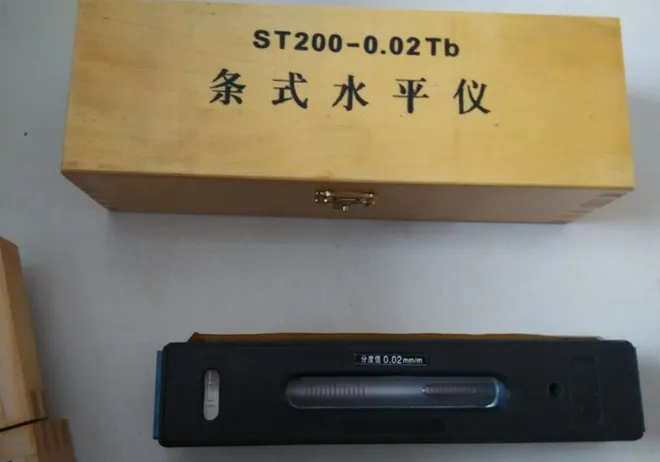
V-Block Technology Revolutionizing Manufacturing Precision and Efficiency
The Paradox of V Block V Block Navigating the Dual Realities of Virtual and Physical Worlds In the
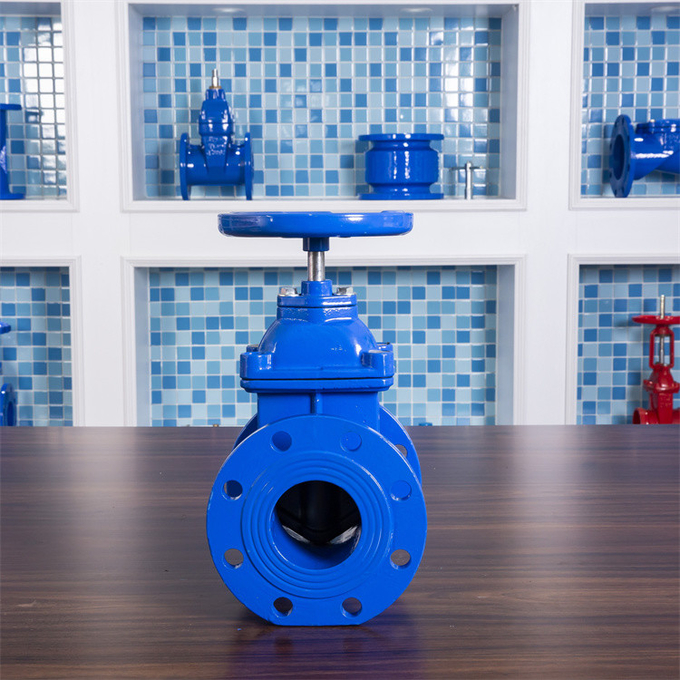
Y Type Strainer Function
In the world of fluid mechanics and piping systems, maintaining the efficiency and longevity of equi

Wholesale Valve Selection_ How to Choose the Right Types of Water Valves for Commercial Plumbing
Water valves are essential components in plumbing and industrial systems, controlling the flow and p
 English